Cruikshank Realty, Inc. FAQ
Straight answers for farm, ranch, recreational, residential, and commercial property owners and buyers.
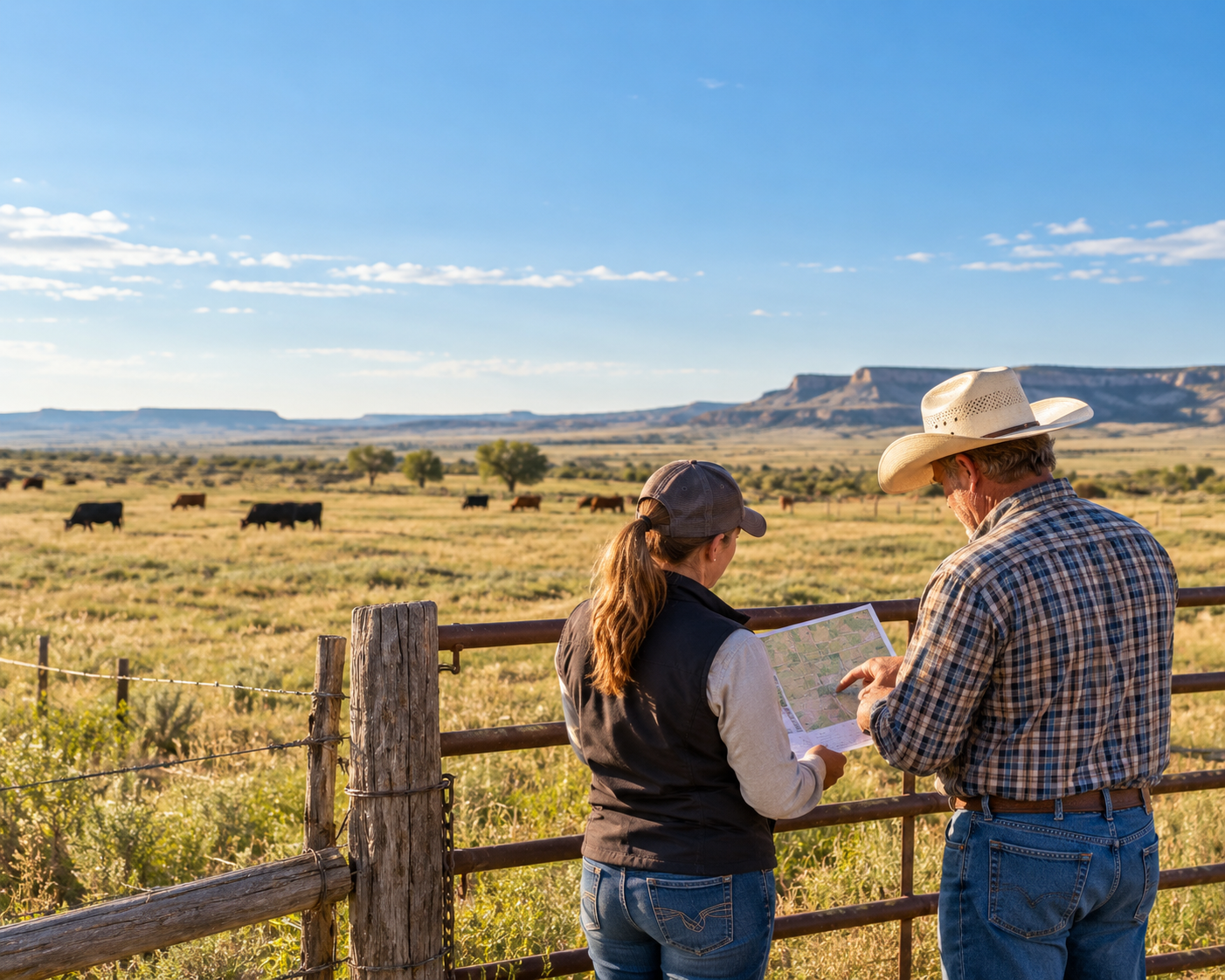
Buying or selling rural real estate is rarely a simple price-per-acre decision. A productive farm, working ranch, recreational tract, homesite, or development property may involve water, soil, access, improvements, carrying capacity, land-use restrictions, financing, timing, and long-term goals. The right questions help uncover the real value—and the real fit—of a property.
Cruikshank Realty has served Southeast Colorado and the surrounding High Plains since the mid-1980s. Our team works with buyers and sellers across Colorado, Kansas, New Mexico, and Oklahoma, combining firsthand agricultural knowledge with real estate, valuation, auction, consulting, residential, and commercial experience. Below are answers to some of the questions we hear most often.
Q1. What types of property does Cruikshank Realty handle?
Answer: We specialize in farm and ranch land, agricultural acreage, irrigated ground, dryland farms, grazing land, cattle and livestock operations, recreational property, rural homesites, development land, and commercial real estate. We also have a experienced and aggressive residential team that assists with homes, estates, investment properties, and houses with acreage.
That range matters because many rural properties do not fit neatly into one category. A parcel may include a home, productive acreage, outbuildings, hunting value, development potential, or commercial possibilities. Our goal is to evaluate the entire property—not force it into a narrow box.
Q2. What should a farm or ranch buyer evaluate besides acreage and asking price?
Answer: Acreage and price are only the starting point. Buyers should consider the property’s water availability and rights, soil quality, carrying capacity, access, fencing, improvements, terrain, current land use, operating history, and long-term potential. For irrigated property, the source, reliability, and legal status of the water can be especially important.
We also encourage buyers to think about how the property must perform for them. A producer expanding an operation, a first-time ranch buyer, a recreational buyer, and a long-term investor may look at the same land very differently. The best property is the one that supports the buyer’s actual goals.
Q3. Why does firsthand agricultural experience matter in a land transaction?
Answer: Rural real estate requires more than knowing how to write a contract or calculate a price per acre. Brokers who understand farming, ranching, livestock, irrigation, rural access, weather patterns, and land management can spot practical strengths and concerns that may not be obvious from a listing sheet.
Our land professionals bring real-world operational experience to the conversation. That helps us ask better questions, communicate more clearly with producers and landowners, and provide advice grounded in how the land is actually used—not just how it looks on paper.
Q4. How do I find out what my farm, ranch, home, or commercial property is worth?
Answer: The process begins with a careful valuation. Cruikshank Realty offers land valuations, residential market analyses, and Broker Opinions of Value for commercial property. A strong valuation considers relevant sales, current market activity, location, property condition, income or production potential, improvements, water, access, and the features that make the property different from nearby sales.
For rural property, the most useful comparisons are not always the closest properties geographically. A knowledgeable broker may need to compare productivity, water, use, buyer demand, and operational characteristics across a wider area to develop a realistic pricing strategy.
Q5. When might an auction be a better choice than a traditional listing?
Answer: An auction may be a strong option when a seller wants a defined timeline, competitive bidding, broad exposure, transparent terms, or a structured process for selling multiple tracts. Auctions can be especially useful for estate property, agricultural transitions, consolidation, unique land, and properties likely to attract several qualified buyers.
An auction is not automatically the best method for every property. The right choice depends on the seller’s goals, the property, market demand, timing, and acceptable terms. We evaluate those factors with the seller before recommending an auction or a traditional listing.
Q6. What are the main advantages of a farm or land auction?
Answer: A well-planned auction creates a focused marketing period and a specific sale date. It can bring motivated buyers together, encourage competition, and give all participants a clear view of the bidding process. Sellers also retain meaningful control over the auction structure and terms.
• A defined marketing and sale timeline
• Competitive, market-driven bidding
• Regional exposure to producers, investors, and land buyers
• Transparent bidding and equal access for participants
• Seller-controlled conditions, reserve terms, closing expectations, and financing requirements
• Pre-qualified bidders and a lower risk of a failed closing
Q7. Can Cruikshank Realty help me find property that is not publicly listed?
Answer: Yes. Some owners are willing to discuss a sale before a property is publicly marketed, and some opportunities are shared privately within regional networks. Buyers can tell us what they need—including acreage, water, soil type, terrain, herd size, location, improvements, and investment goals—and we can search both active listings and potential off-market opportunities.
A detailed buyer profile is helpful. The more we understand about your operation, budget, timing, and non-negotiable requirements, the better we can identify properties that are worth your attention.
Q8. What information should I provide when beginning a farm or ranch search?
Answer: Start with the purpose of the purchase. Are you expanding a current operation, relocating, investing, adding pasture, seeking irrigated ground, or buying a recreational retreat? Then identify the practical requirements that will determine whether a property works.
• Preferred location and travel radius
• Minimum and maximum acreage
• Water needs and preferred water sources
• Soil, crop, grazing, or carrying-capacity requirements
• Terrain, access, fencing, and improvement needs
• Herd size, operating goals, budget, and preferred timeline
Q9. Do you assist with 1031 exchanges and other tax-deferred strategies?
Answer: We provide real estate guidance for clients considering a 1031 exchange and work alongside their legal, tax, and qualified-intermediary professionals. Exchange planning can affect the timing of a sale, identification of replacement property, closing coordination, and the type of property a client pursues.
Cruikshank Realty has experience with simultaneous, delayed, reverse, and Delaware Statutory Trust strategies. Because tax and legal consequences vary, clients should rely on their own attorney and tax advisor for formal advice while we coordinate the real estate side of the transaction.
Q10. What should buyers consider when looking at recreational or hunting land?
Answer: Recreational value is shaped by more than scenery. Buyers should examine wildlife habitat, water sources, cover, terrain, seasonal access, neighboring land uses, public-land proximity, existing improvements, and whether the property supports the buyer’s intended activities.
Southeast Colorado, Western Kansas, and Northeast New Mexico can offer opportunities for hunting, wildlife viewing, off-grid retreats, and rural recreation. Depending on the location, buyers may be interested in elk, mule deer, pronghorn, whitetail deer, turkey, upland birds, or waterfowl. A careful property review helps separate attractive marketing language from practical recreational value.
Q11. Can you help evaluate land for development or a commercial project?
Answer: Yes. Our commercial and site-selection services assist buyers, sellers, investors, and businesses evaluating land for residential growth, retail, warehouse, industrial, logistics, agricultural, energy, or mixed-use purposes. The best-looking parcel is not always the most workable site.
Important considerations may include access, traffic, utilities, zoning, water, minerals, surrounding uses, development feasibility, market demand, and the long-term plan for the property. We help clients compare locations and identify issues early, before they become expensive surprises.
Q12. Does Cruikshank Realty only work with agricultural property?
Answer: No. Agriculture is a core part of our experience, but we also assist with residential homes, estates, houses with acreage, rural homesites, investment properties, commercial buildings, and development sites. This is especially valuable in smaller communities, where a single transaction may
involve residential, agricultural, and commercial considerations at the same time.
Whether a client is buying a first home in Lamar, selling a family ranch, locating a business site, or searching for acreage to build on, our approach remains the same: understand the client’s goals, provide straight answers, and protect the client’s long-term interests.
Q13. What geographic area does Cruikshank Realty serve?
Answer: We are headquartered in Lamar, Colorado, and our roots are in Southeast Colorado and the High Plains. Our land advisory and brokerage work extends across Colorado, Kansas, New Mexico, and Oklahoma, with particular familiarity throughout the rural communities and agricultural markets surrounding Prowers County.
For buyers, this wider regional reach creates more options. For sellers, it expands the pool of potential buyers beyond the nearest town or county and allows marketing to reach producers, investors, families, and land buyers across state lines.
Q14. What makes Cruikshank Realty different from a general real estate brokerage?
Answer: Our company was built around land, agriculture, local relationships, and long-term trust. We combine decades of regional experience with firsthand knowledge of farming, ranching, water, property operations, auctions, marketing, residential sales, and commercial site selection.
Just as important, our approach is consultative. We take time to understand the property, the people involved, the timeline, and the outcome the client actually needs. The goal is not simply to complete a transaction—it is to help each client make a sound decision that protects value and supports the next chapter.
Q15. What is the best first step if I am thinking about buying or selling?
Answer: Begin with a confidential conversation. Sellers can request a valuation and discuss timing, property preparation, marketing options, and whether a traditional listing or auction makes sense. Buyers can share their goals, budget, preferred area, and property requirements so we can help build a focused search.
You do not need to have every detail figured out before contacting us. A consultation is often the best way to organize the questions, identify the information still needed, and develop a practical plan for moving forward.
Have a Question We Did Not Cover?
Every property and every real estate decision is different. Talk with a Cruikshank Realty advisor about your land, home, investment, auction, or property search.
Cruikshank Realty, Inc. • 20 S. Main Street, Lamar, Colorado 81052 • (719) 336-7802
The latest from Cruikshank Realty